IDRLnet




IDRLnet is a machine learning library on top of PyTorch. Use IDRLnet if you need a machine learning library that solves both forward and inverse differential equations via physics-informed neural networks (PINN). IDRLnet is a flexible framework inspired by Nvidia Simnet.
Docs
Installation
Choose one of the following installation methods.
PyPI
Simple installation from PyPI.
pip install -U idrlnet
Note: To avoid version conflicts, please use some tools to create a virtual environment first.
Docker
Pull latest docker image from Dockerhub.
docker pull idrl/idrlnet:latest
docker run -it idrl/idrlnet:latest bash
Note: Available tags can be found in Dockerhub.
Anaconda
conda create -n idrlnet_dev python=3.8 -y
conda activate idrlnet_dev
pip install idrlnet
From Source
git clone https://github.com/idrl-lab/idrlnet
cd idrlnet
pip install -e .
Features
IDRLnet supports
-
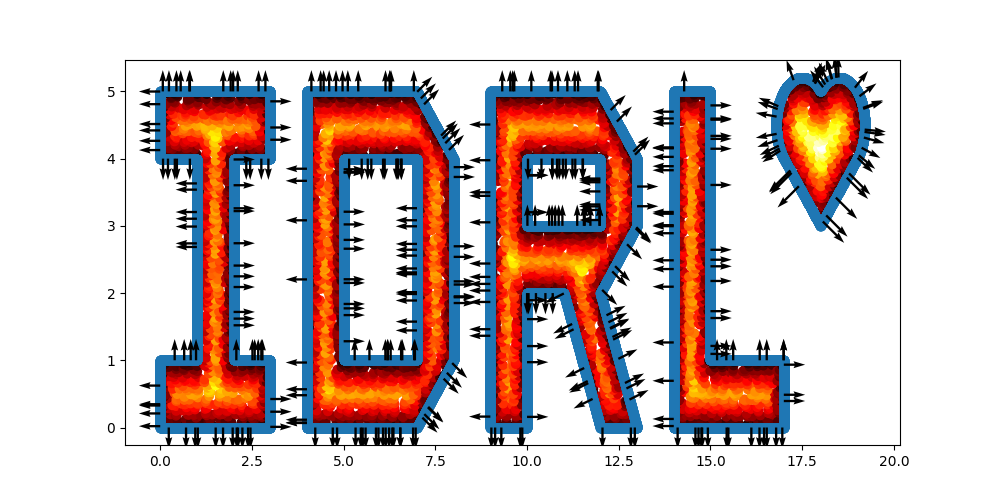
complex domain geometries without mesh generation. Provided geometries include interval, triangle, rectangle, polygon, circle, sphere… Other geometries can be constructed using three boolean operations: union, difference, and intersection;
-
sampling in the interior of the defined geometry or on the boundary with given conditions.
-
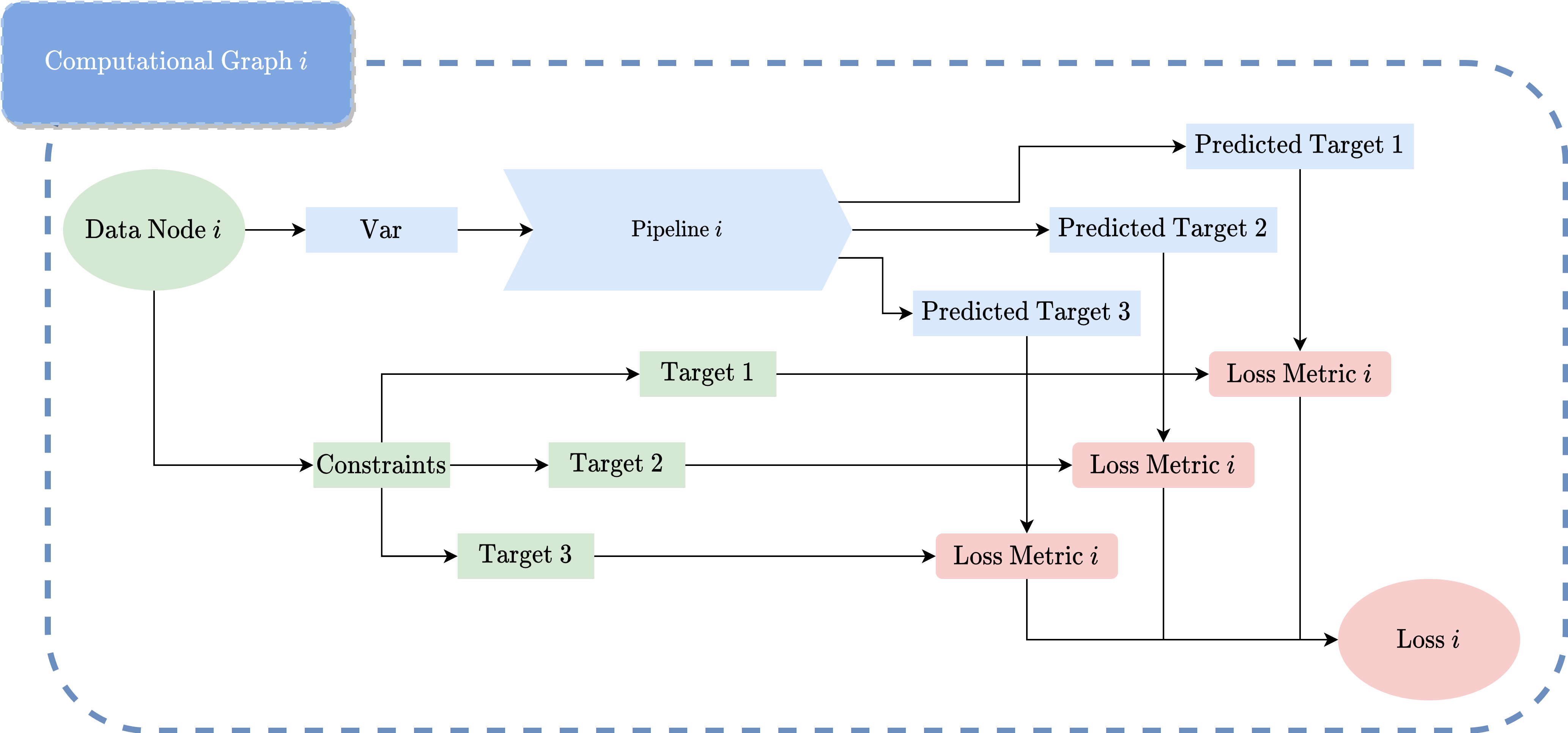
enables the user code to be structured. Data sources, operations, constraints are all represented by Node. The graph will be automatically constructed via label symbols of each node. Getting rid of the explicit construction via explicit expressions, users model problems more naturally.
-
builds computational graph automatically;
-
user-defined callbacks;

-
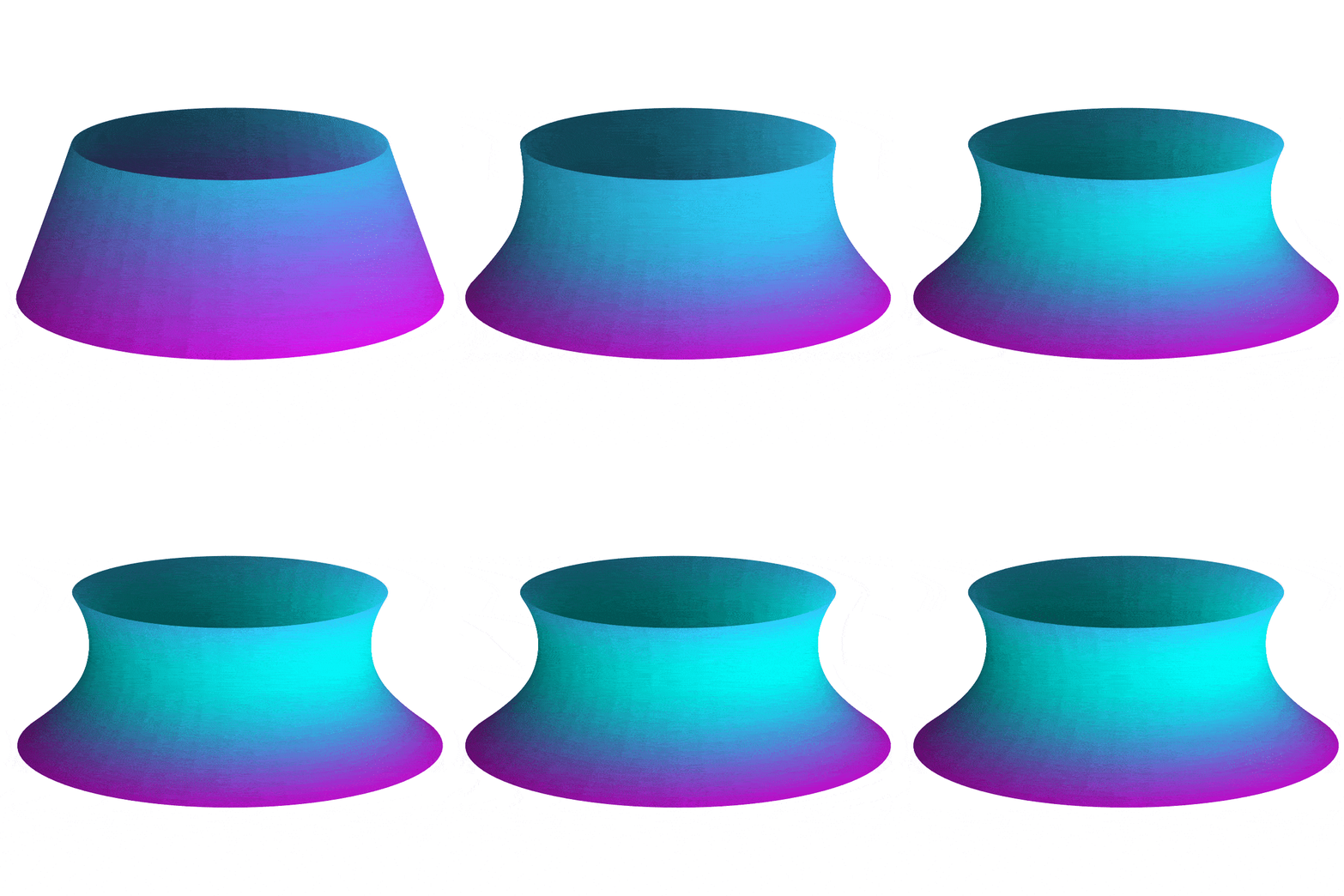
solving variational minimization problem;
-
solving integral differential equation;
-
adaptive resampling;
-
recover unknown parameters of PDEs from noisy measurement data.
It is also easy to customize IDRLnet to meet new demands.
Contributing to IDRLnet
First off, thanks for taking the time to contribute!
-
Reporting bugs. To report a bug, simply open an issue in the GitHub “Issues” section.
-
Suggesting enhancements. To submit an enhancement suggestion for IDRLnet, including completely new features and minor improvements to existing functionality, let us know by opening an issue.
-
Pull requests. If you made improvements to IDRLnet, fixed a bug, or had a new example, feel free to send us a pull-request.
-
Asking questions. To get help on how to use IDRLnet or its functionalities, you can as well open an issue.
-
Answering questions. If you know the answer to any question in the “Issues”, you are welcomed to answer.
The Team
IDRLnet was originally developed by IDRL lab.
Citation
Feel free to cite this library.
@article{peng2021idrlnet,
      title={IDRLnet: A Physics-Informed Neural Network Library},
      author={Wei Peng and Jun Zhang and Weien Zhou and Xiaoyu Zhao and Wen Yao and Xiaoqian Chen},
      year={2021},
      eprint={2107.04320},
      archivePrefix={arXiv},
      primaryClass={cs.LG}
}


评论