Biosense - Web
IoT system for indoor plant care, monitoring health and offering personalized recommendations for growth.
Our Inspiration 💡
The same way a Fitbit monitors a variety of human health metrics including temperature and oxygen saturation, we have developed the same for plants. Our team noticed that there were a lack of applications which did so, and thus sought to make one. Knowing this, paired with UN SDG’s, we created Biosense.
For the aim of “Good Health and Well-being” we want indoor plants to enhance air quality and overall well-being. We embraced “Industry, Innovation, and Infrastructure,” through employing plant vital monitoring systems, advancing smart agriculture and sustainability. By addressing “Responsible Consumption and Production,” indoor gardening promotes water and energy efficiency, incombating climate change, biodiversity loss, and pollution. This synergistic approach fosters a sustainable and healthier future for both ourselves and the plants.
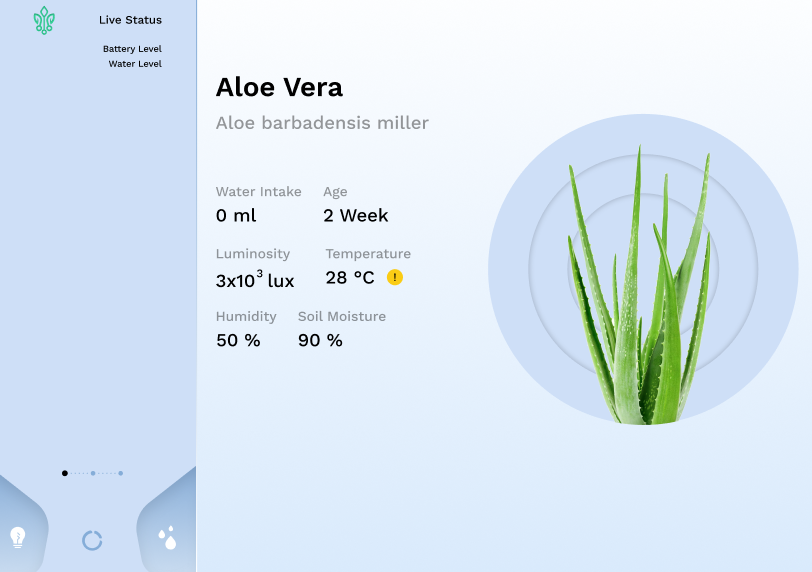
Our system combines the internet of things (IoT) which senses the environment to detect the health of plants, all whilst identifying any diseases it may carry. We are using PostgreSQL IoT which monitors luminosity, temperature, humidity and soil temperature. Once a disease is identified, the system gives personalised recommendations for better health and growth.
How we Built it 🏠
Framework: Next.js, Tailwind
ORM: Prisma
Language: Typescript
Database: PostgreSQL
Design

Accomplishments 💪🏻
The team developed both personal and professional growth:
Technical Skills: We developed and enhanced our expertise and obtained new skills ranging from ML/AI as well as UX/UI design.
Soft Skills: Collaborating on this project matured our communication, leadership, and teamwork skills. Our diversified skills were salient in achieving the success and efficiency of our project.
Challenges we ran into 😦
Insights 🤓
By analyzing data, providing personalized recommendations, and enabling remote monitoring, users can create an optimal environment for their plants.
However, this could be used on a larger scale for farmers and has several positive impacts for both them and the environment:
-
Water Conservation: The irrigation system can monitor soil moisture levels and weather conditions to optimise water usage. This would be particularly salient for environments which face drought or water scarcity.
-
Reduction in Chemical use: Monitoring plant vitals: health metrics/diseases can help farmers apply fertilisers more precisely and when necessary. This leads to less environmental pollution and biodiversity conservation of both that ecosystem and surrounding ones.
-
Alleviating Climate Change: Sustainable farming guided by Biosense can lead to healthy soils sequestering carbon and reduces the carbon footprint associated with irrigation.
What’s Next for Biosense ❓
Continue developing the application because we want to impliment this in our lives!
Contributors
The following people who have contributed to this project:


评论