OpenMV
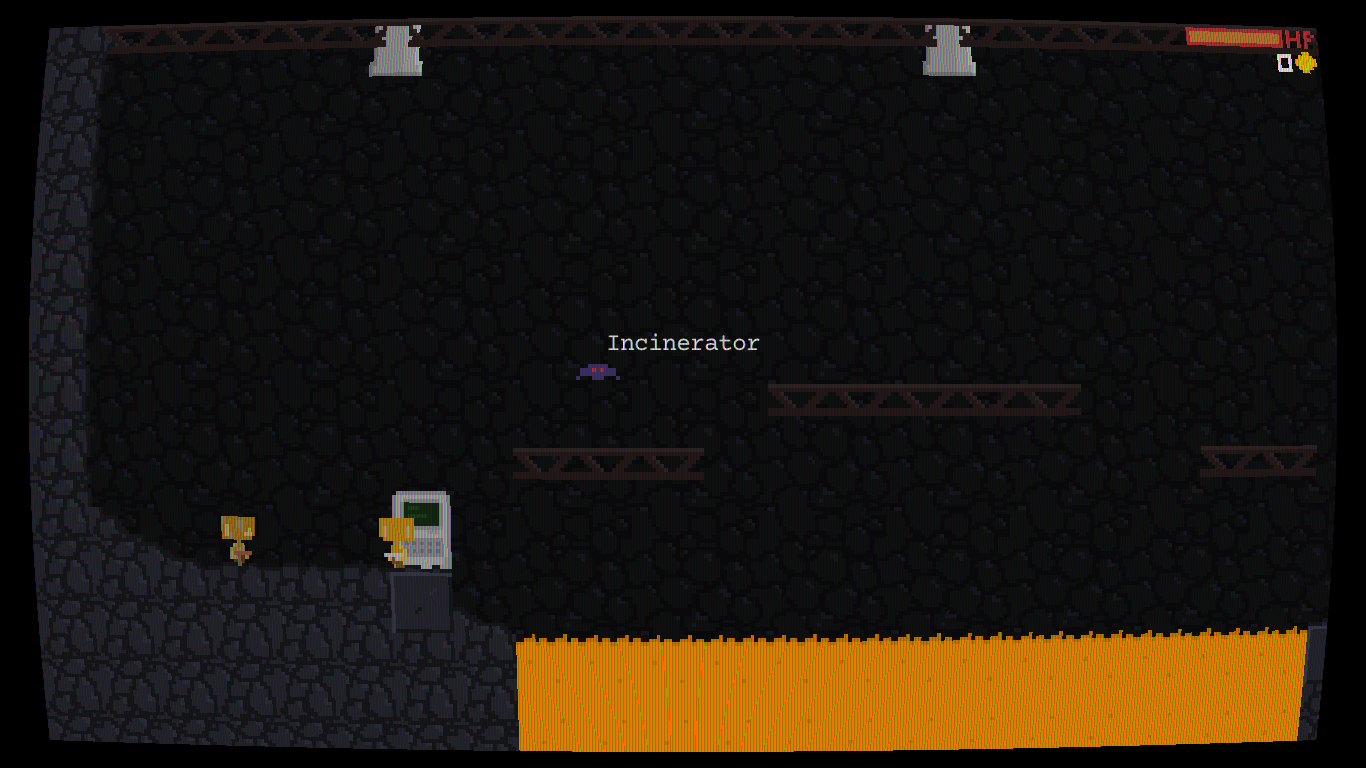


An open source Metroidvania.
Created from the ground up in C99.
Features
Building
Generate a Makefile using Premake and use that to compile everything.
Before you can run the game in release mode, build the packer project and run
it from the project root to create a file named res.pck which contains all of
the game’s resources. The game reads from this file in release mode so that
shipping the entire resource folder isn’t required. The packer packs all of
the files listed in packed.include; This file is sometimes out of date,
so if the game struggles to load in release mode, try debug mode instead.
Dependencies on Linux:
libdllibGLlibmlibX11libpthread
Dependencies on Windows:
opengl32gdi32user32kernel32winmm
I develop everything under 64-bit GNU/Linux, with Clang and glibc. There’s no
reason why it wouldn’t work under a 32-bit system with GCC, though (The Premake
scripts will need to be modified to build under 32-bit). Windows should work,
but I rarely test it, so some minor modifications might be needed here and there.
Note for MSVC users
OpenMV builds and runs under MSVC, as of recent. It relies on the __LINE__
preprocessor directive that is a part of ANSI C. However, Microsoft’s edit and
continue debugging feature does something stupid that causes this directive
to be variable, which breaks the build. To “fix” this, you must disable the
edit and continue feature in the project settings, by selecting “Program
Database” under “Debug info” instead of “Program Database for Edit and
Continue”.
Using the Engine
You may use this project as a fairly solid foundation for other game projects. The
renderer, entity component system, map loader, resource manager and audio systems are
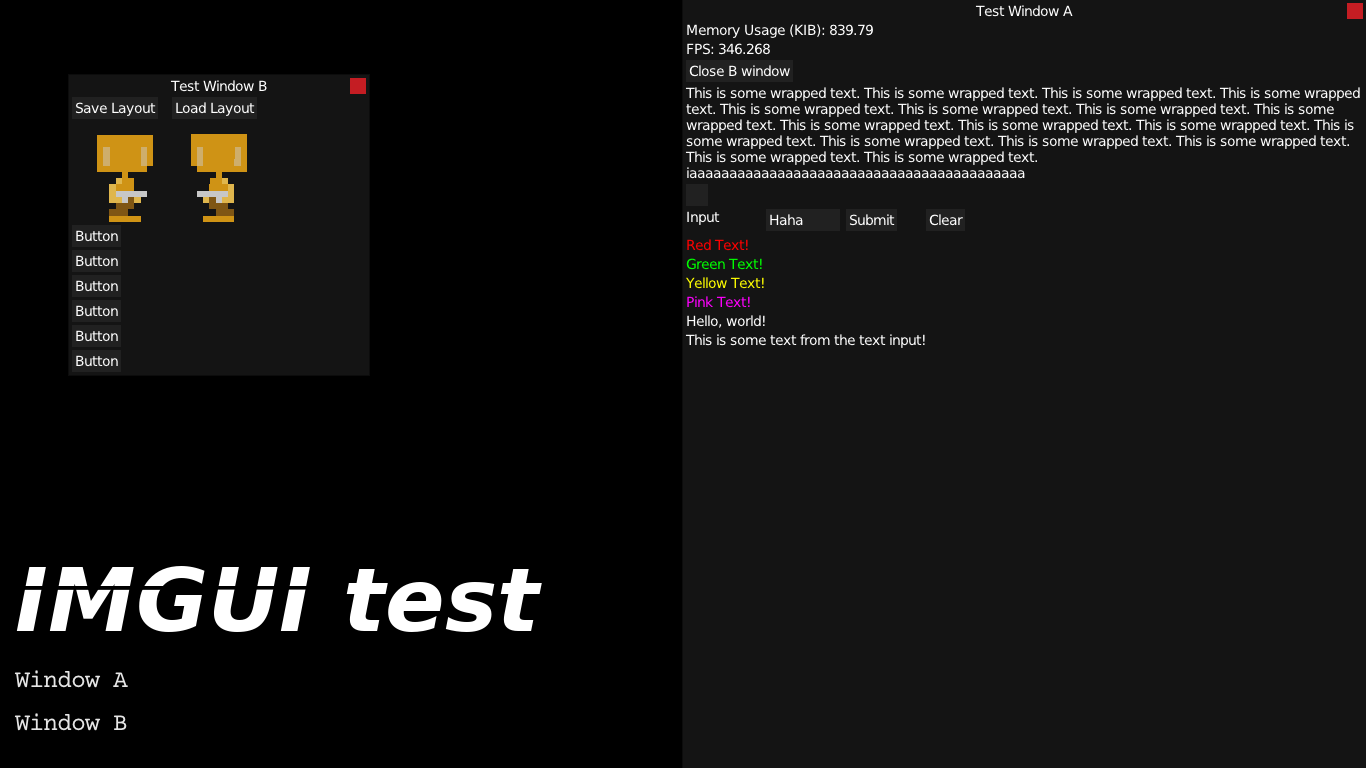
all fairly stable and bug-free to my knowledge. The scripting language and the IMGUI
probably have bugs.
Using mksdk
Use mksdk if you want to use the bootstrapper with code hot reloading. This offers
less control, but allows rapid prototyping.
A utility in util/mksdk exists so that manually copying files isn’t required
in order to create a new project. Simply build this project and run it from
the project root to create a file named sdk.tar. Extract this file and
start creating.
The default project creates a blank window and spams the console every
frame. Edit the code in logic/src/main.c to create your game logic. All the
code compiled in this project is hot-reloadable, meaning you can re-compile
it and have the code update in real time without needing to restart the program.
The default project also creates a loading screen while the on_init function
in the logic project is running. Comment out lines 32-65 in
bootstrapper/src/main.c to remove this if you don’t want it.
Using the Core Library
Alternatively, you can simply use the core project by itself to manage things
for a game. Doing this, you have manual control over things like the game loop.
By default, the core is built as a dynamic library. It can also be built as a
static library, by editing the premake script. Note that this has some technical
implications.
Levels
Levels are created using the Tiled level editor and exported using a custom binary
format. An extension for Tiled to add this format can be found in
tiledext/mapformat.js.
Vim
c.vim contains a Vim syntax file to highlight common types used in OpenMV’s
code, such as entity, null and v2f. It should be placed in your
after/syntax folder, as c.vim.
Stuff by Other People
Below is a list of pieces of code that I didn’t write:
Everything else was written by me, from scratch.
Contributing
If you have plans to contribute code to this repository: First of all, thank-you
for your time! Second, please follow the general style of the existing code as
much as possible. This includes: Using tabs for indentation (not spaces), using
double instead of float for timing and not typedef’ing structures or
enumerations. Everything should adhere to standard C99 where possible or at
the very least compile with Clang (minimise the use of GNU extensions). External
libraries should also be avoided, though single-header utilities are fine.


评论